

We have all heard the quiet, shaking voice that whispers just before we try to do something new: “What if I fail?”.
This question feels harmless, sometimes even looks as though we’re just being careful and responsible. But the truth this question hides is one of the most powerful killers of our dreams.
It’s fear.
Fear of failure, fear of uncertainty, fear of embarrassment, fear of change, fear of the unknown.
“What if I fail?” is Just Fear of Failure
Our brain is wired for survival. Centuries ago it helped us avoid danger. But nowadays due to different mental health issues, this instinct misfires in certain people. It makes us fear emotional risks instead of physical: rejection, judgement, disappointment, etc.
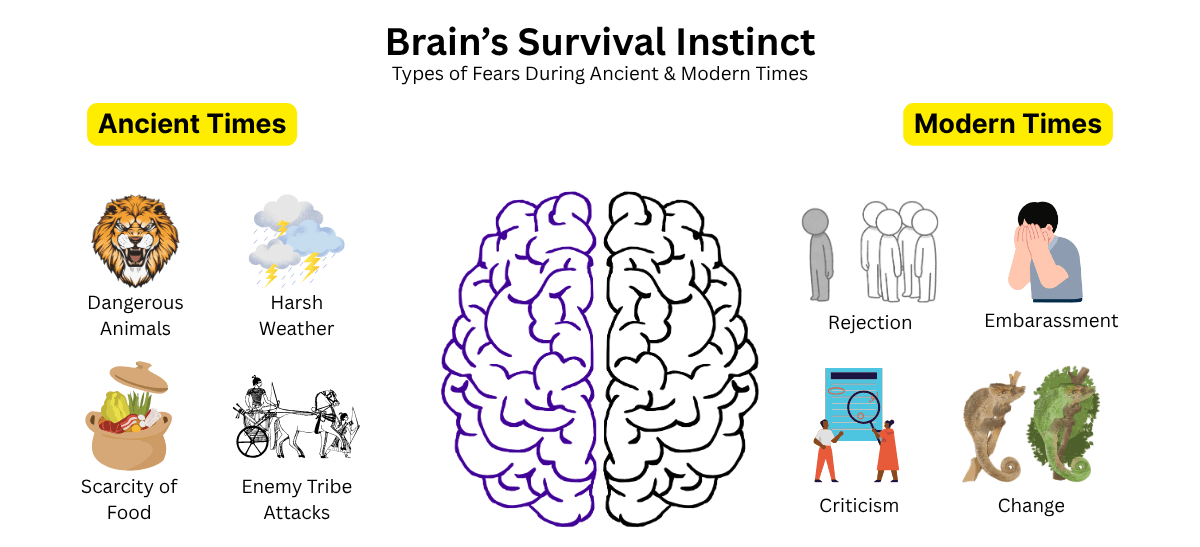
When this fear of failure overtakes us, it doesn’t just stop us from acting, it begins to shape how we think, feel and live. The more we fear, the more it starts controlling our behavior that limits our potential, dulls our dreams and weakens self-trust.
How this fear kills our dreams and goals
Fear of failure is silent. It doesn’t make noise; it doesn’t scream; it doesn’t make any visible impact. It simply convinces you to play it safe, to wait a little longer, to tell you that you’re not ready, you’re not worth it, and so on. In doing so, it simply robs you of the life that you were meant to live.
It doesn’t destroy our dreams overnight; it programmes your subconscious gradually throughout months and even years by suggesting you excuses like:
- “It’s not the right time.“
- “I need to be more prepared.“
- “Maybe later, when things are better.“
- “I’ll wait for the right opportunity.“
The truth, however, is that that time never comes. You become a slave to your failure mindset that is embedded into your subconscious already.

Every time you let fear take control, even for a very small decision, a small part of your confidence dies and your mind gets further strengthened into believing that “I am actually a failure”. Due to these negative affirmations, you stop believing in yourself a little more each time and before you know it, you start spending most time in your comfort zone at home.
Why Failure Isn’t the Enemy
We keep saying what if I fail?, What if i get rejected?, What if people laugh at me?, What if I’m not good enough?, What if I waste years chasing the wrong dream? and so on, and thus, we fail before even starting.
Fear kills more dreams than failure ever will.Suzy Kassem
Failure is nothing to be embarrassed about. In fact, it acts as proof that you weren’t just lucky. You actually worked to get what you have.
Thomas Edison failed thousands of times while trying to build a light bulb. When he was asked about those failures, he optimistically said: “I didn’t fail 10,000 times. I found 10,000 ways that didn’t work”.
There is not a single millionaire or billionaire out there in the world that hasn’t failed at least once.
Failure acts as a feedback. It’s how you get to know what works and what doesn’t. Once you succeed, these failures will become your warrior’s wounds.
How to Overcome the “What If I Fail” Mindset
The thought ‘What if I fail?’ comes from a mindset of fear. Once you recognize that, it becomes much easier to shift your thinking toward ‘What if I succeed?’. All you have to do is shift gears from negative to positive. Here’s how you can stop letting fear decide your choices:
1. Acknowledge Your Fear
The first thing to do is stop making excuses about why you’re not taking action. Stop saying “It’s not the right time,” “I am not confident enough,” etc. These excuses are preventing you from moving forward. Accept your fear; don’t fight or hide behind it.
Say “Yes, I’m scared of doing ________“. By doing this, you’re literally taking the first step to taking back control of your behavior and decisions.
2. Replace the Question
As soon as you start thinking “What if …,” stop right there, and replace this thought with positive: “What can I learn/gain from this?“. This trains your brain to look for solutions instead of problems.
3. Visualize Success (Really!)
Spend a few moments literally visualizing what success would look and feel like. Visualization rewires your subconscious to expect success instead of failure.
4. Take the Small Action Immediately
Action kills fear. As soon as you start doing it, you can feel the fear vanishing away. The fear of an interview only lasts till you get inside and sit, the fear of rejection only lasts until you ask, the fear of failure only lasts until you step forward, and so on.
Do one small thing that moves you forward; send that email, make that call, write that first paragraph. Momentum is the antidote to overthinking.
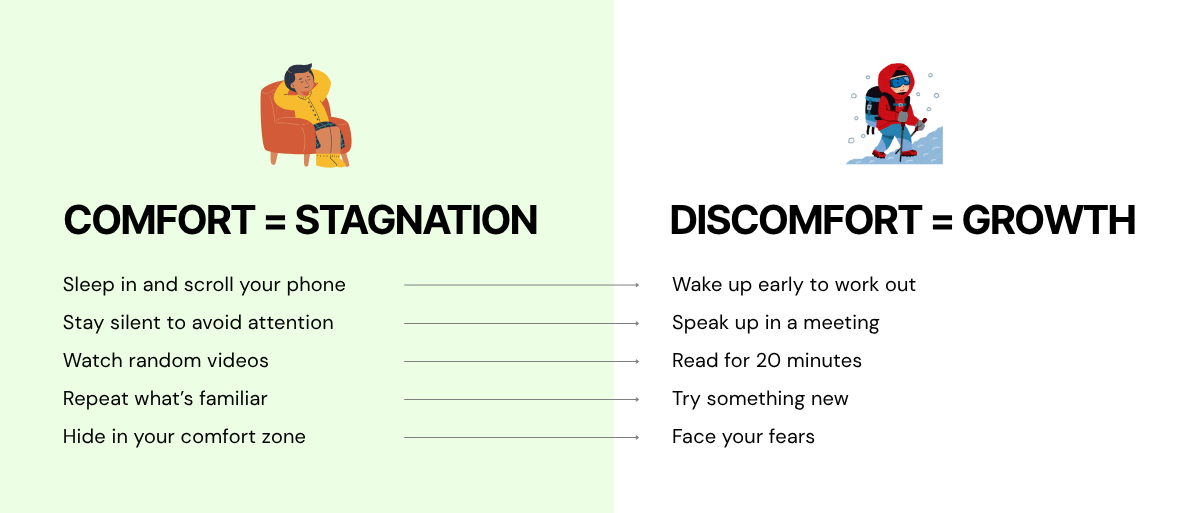
5. Embrace Discomfort
It’s a known fact that growth and comfort cannot exist together. You have to choose one. If you want to grow and live the life you want, you must train yourself to handle uncertainty with courage, not avoidance.
The more you avoid discomfort, the more you’ll suffer. The more you actively chase discomfort, the happier you’ll be.
6. Surround Yourself with Growth Energy
You are the average of the five people you spend the most time with.Jim Rohn
Your environment shapes your mindset. A failure-oriented social circle will make you a failure as well, and a growth-oriented environment will push you towards progress.
- Follow people who have the qualities you want, not random influencers.
- Read books for learning skills.
- Consume content for learning and education, not entertainment.
7. Reward Effort, Not Just Results
Don’t get sad, disappointed or upset just because the results of an action were not as expected. You’re trying to change habits and behaviors that took years to build. It will take a few months to change that.
You must celebrate your attempts, no matter how small. Every celebration of an attempt gives your brain proof that you did something that you wanted. This will gradually help your mind to reinforce its beliefs that “failure is nothing to be afraid of”.
The Cost of Never Trying
Imagine a point in life where you realize that people who are weaker than you, less educated than you, less wealthy than you, are living a life that you want. How would that make you feel?
That feeling is the cost of “never trying”.
No one stopped you. Those people who are living the life that you want didn’t get lucky. They just had courage to take action on what they wanted.
You didn’t stop because you lacked talent or opportunity, you stopped because you let your fear control you.
The worst thing you can give your future self is not failure, but regret. A regret of never trying.
When you avoid failure, you also avoid success, love, growth, and the version of yourself you were meant to become. Fear may protect you from pain, but it also shields you from greatness.
Takeaway: What If You Fly?
The next time that little voice whispers “What if I fail?,” answer it with a better question: “What if I succeed?”
Because somewhere between fear and courage lies the life you’ve always wanted. Don’t let the silent fear of failure kill your dreams and goals; let it be the reason you rise above them.
If this post spoke to you, don’t stop here. Subscribe to my newsletter for weekly insights on fear, mindset, and personal growth.
Subscribe