

Our smartphones have become so powerful that they’re no longer just communication tools. They’ve become extensions of our hands and minds. The phone addiction has become so powerful that most of us don’t even enter our bathrooms without a phone in hand.
The minute we wake up and right before we’re going to sleep, it has become our habit to check our phones; so much so that even if you don’t have an internet connection, you’ll still take it out of your pocket, just out of habit.
What is phone addiction?
Phone addiction, also known as nomophobia, is a behavioral disorder characterized by excessive use of mobile devices. Unlike substance addiction, it doesn’t involve chemicals, but the dopamine release in your brain works almost the same way.
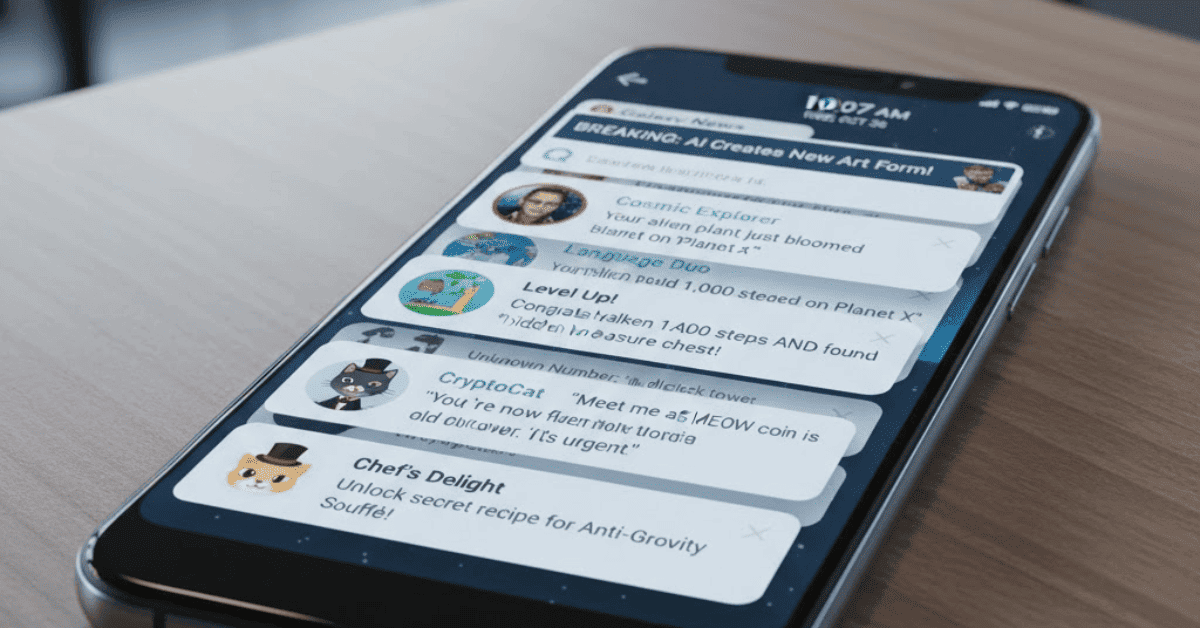
Every time you get a notification, a like, or a new message, your brain rewards you with a little hit of pleasure, reinforcing the urge to keep checking your screen.
Why Is Mobile Addiction So Common?
The answer is simple: our phones are designed to be addictive.
Social media platforms, games, and even news apps are engineered to trigger dopamine receptors, keeping you hooked. Algorithms constantly serve personalized content, and the infinite scroll keeps you in a loop of mindless consumption.
On top of that, FOMO (Fear of Missing Out) plays a major role. People fear being left out of online conversations, trends, or updates, which leads them back to their screens again and again.
Social Media Addiction: How does it work?
Social media addiction works almost exactly like any other behavioral addiction, it hijacks your brain’s reward system. Every time you open Instagram, Facebook, or TikTok, you’re not just checking updates; you’re entering a carefully designed loop of anticipation and reward.
You scroll, your brain anticipates something interesting, and when you finally see a funny video, a like, or a message, your brain releases dopamine, the same chemical associated with pleasure and motivation.
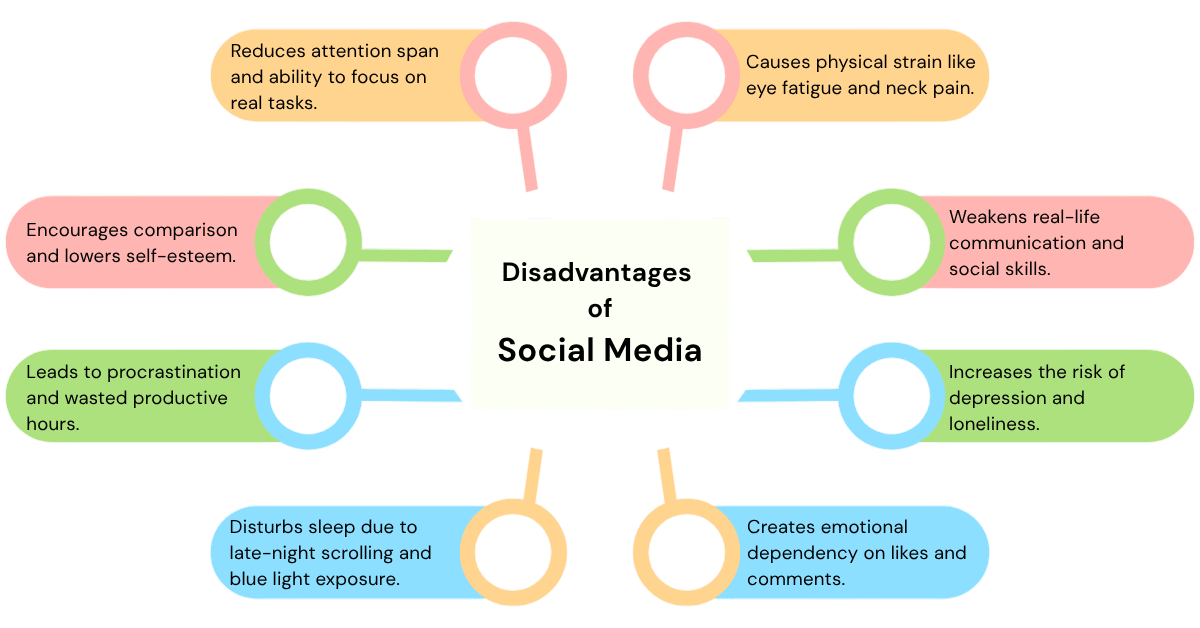
The catch? The reward is unpredictable. Sometimes you see something exciting, sometimes you don’t, and this variable reward pattern is what keeps you coming back. Psychologists call it the “slot machine effect.” Just like gamblers pull a lever in hopes of a win, you keep refreshing your feed, hoping for another dopamine hit.
Social media platforms are fully aware of this psychology. That’s why features like infinite scroll, autoplay videos, and push notifications exist; they’re built to capture your attention and make leaving difficult. Over time, this constant cycle of stimulus and reward conditions your brain to crave more, making you dependent on digital validation and constant stimulation.
Causes of Phone Addiction
The phone addiction is caused by several factors; a few of them are as follows:
- Dopamine-Driven Design
Our life goals take time, energy and patience, but phones offer instant gratification. This causes your brain to choose the shortcut — your phone.
- Escapism from Reality
Many people use their phones to escape boredom, stress, or anxiety. It’s easier to scroll through reels or memes than to sit with uncomfortable emotions.
But this habit trains your brain to avoid real-life problems instead of solving them, making the cycle hard to break.
- ADHD and Impulsivity
People with ADHD (attention-deficit/hyperactivity disorder) or impulsive behavior are more likely to develop smartphone addiction. The constant flow of new content, sounds, and visuals provides the instant stimulation their brains seek, making it harder to focus on slower, more rewarding tasks.
- Need for Social Validation
Social media fuels our desire to be seen and liked. Each like, comment or new follower triggers a small emotional reward, reinforcing the urge to keep posting and checking. This need for approval creates dependency and gives a false sense of belonging in the online world.
This is the reason many influencers like Misha Agarwal end their lives due to drop in their followers.
The Fatal Danger of Smartphone Addiction ExplainedA sudden drop in followers can feel devastating for influencers because their self-worth often becomes tied to their online validation. Over time, the number of likes, comments, and followers becomes more than just a metric; it becomes a measure of identity, success, and acceptance.
When that validation declines, it can trigger intense feelings of rejection, insecurity, and failure. Many influencers live under constant pressure to stay relevant and maintain engagement. So when the numbers fall, it’s not just about losing followers, it feels like losing value as a person in the eyes of the world.
This emotional crash can be especially dangerous if someone is already struggling with anxiety, depression, or low self-esteem. The brain, conditioned to expect regular dopamine hits from likes and attention, suddenly faces a withdrawal, leading to emptiness, sadness, or hopelessness.
In short, social media creates an illusion that popularity equals worth. When that illusion breaks, it can lead to a painful identity crisis that some people find incredibly hard to cope with.
- 24/7 Accessibility
Your phone is always with you: on your desk, in your pocket, or next to your bed. That constant accessibility makes it easy to reach for whenever you feel bored or restless. Over time, this forms a subconscious habit: boredom → phone → dopamine → repeat.
Symptoms of Phone Addiction
The common symptoms of addiction to smartphones are:
- You check your phone first thing in the morning and you won’t go to sleep unless your phone is at your arm’s length of reach.
- You feel anxious or restless when your phone isn’t nearby.
- You literally lose track of time while scrolling.
- You feel phantom vibrations or check your phone even without notifications.
- Your productivity, relationships, or sleep quality have declined.
Effects of Phone Addiction on Daily Life
Phone addiction affects far more than just your screen time; it quietly reshapes your mental focus, emotions, and physical health.
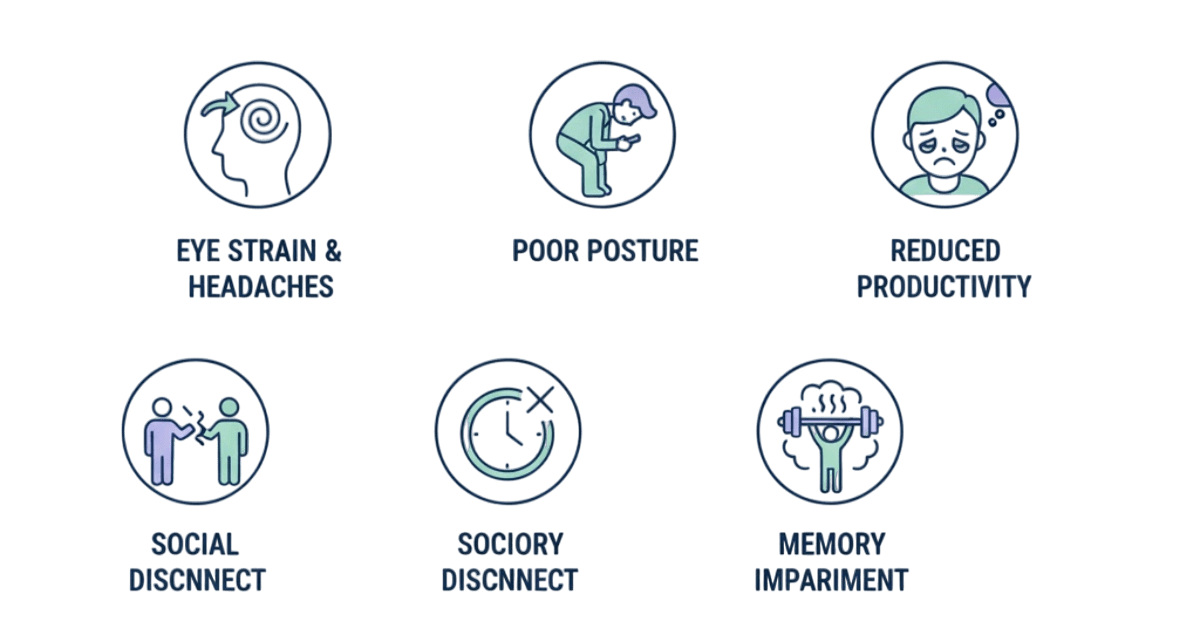
While it may seem harmless, overuse of smartphones can gradually impact almost every area of your life.
Social media has been created and designed only for one thing: to keep you on their platform.
Have you ever wondered why social media is free to use?
Here’s the truth: It’s not free at all. You are paying for social media with more than just money; and no, I’m not talking about your “personal information“. That’s secondary.
I’m talking about your attention. You have no idea how valuable that is, or maybe you do, since you’re reading this article.
Constant notifications and rapid scrolling train your brain to crave quick information and instant results. Over time, this reduces your ability to focus deeply on one task, making studying, reading, or working for long periods feel almost impossible. You are only training for one thing, to stay online on their platform.
The blue light emitted by screens suppresses melatonin, the hormone that helps regulate sleep. Checking your phone before bed tricks your brain into thinking it’s still daytime, making it harder to fall asleep and lowering the quality of your rest. This often leads to morning fatigue, irritability, overthinking and lack of patience.
Ironically, being “connected” online can make you feel lonelier offline. Phone addiction slowly replaces face-to-face conversations with digital interactions.
You may start feeling disconnected from family or friends even when they’re right beside you, a phenomenon called phubbing. Gradually you’ll start losing interest in relationships so much that you’ll start secluding yourself from everyone, which later leads to anxiety, depression and loneliness.
Constant comparison on social media, seeing others’ highlight reels can make you feel inadequate or left behind. Over time, this leads to low self-esteem, anxiety, and even depressive symptoms. The more validation you seek online, the emptier you may feel when it’s not there.
Hours of looking down at your phone can cause neck, shoulder, and back pain; often called “text neck.” Prolonged bad posture also leads to muscle stiffness, tension headaches, and long-term spinal issues.
Phone addiction kills productivity more than we realize. Constantly checking messages or social media breaks your concentration, forcing your brain to refocus again and again. Even a “quick check” can derail your momentum for several minutes, adding up to hours of wasted time each day.
Withdrawal Symptoms of Smartphone Addiction
When you try to cut back on screen time, your brain goes through a short but uncomfortable withdrawal phase, similar to what happens when breaking other addictions.
You might feel irritable, restless, or bored without your usual dose of digital stimulation. You may also notice yourself reaching for your phone unconsciously, even when you’ve decided not to use it.
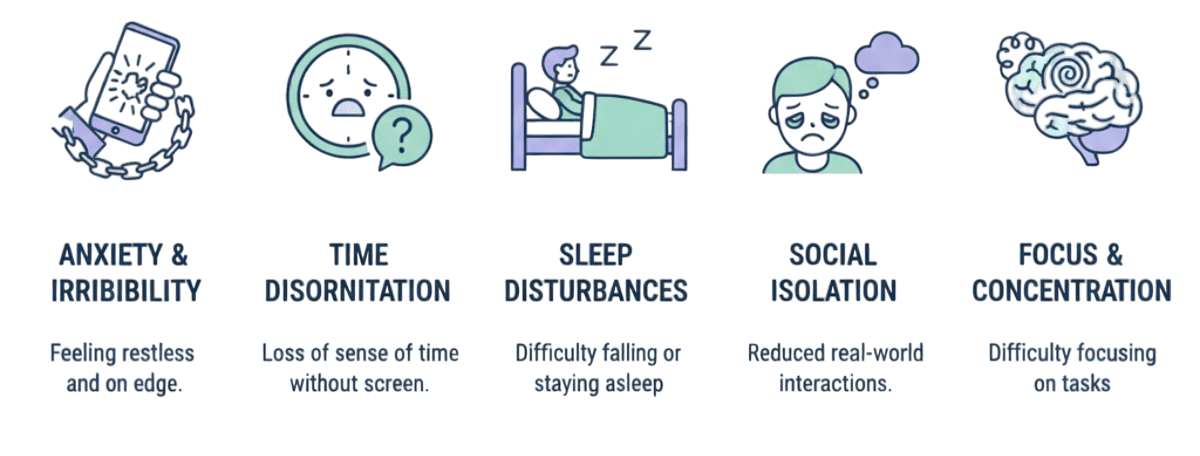
Some people experience mild depression or anxiety, as their brains adjust to the sudden drop in dopamine rewards. You will feel all kinds of negative feelings like anger, worthlessness and uselessness. You will start to question your own life and existence.
Getting Rid of Smartphone Addiction
Here are the top 7 ways you can stop phone addiction, or at least reduce it at first:
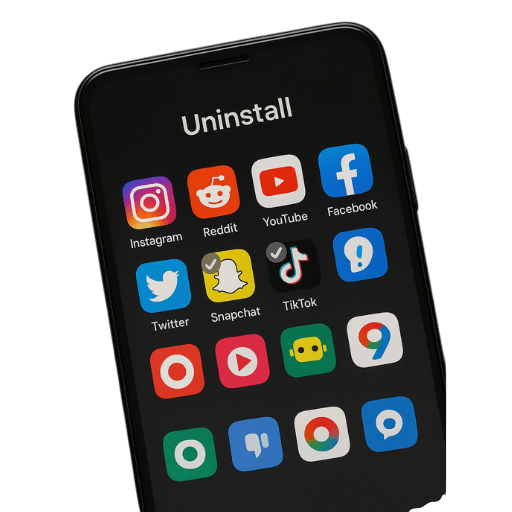
1. Uninstall all the addictive apps
This may sound extreme, but deleting your most time-consuming apps (like Instagram, TikTok, or YouTube) is the quickest way to reduce screen time. If you need them for work, uninstall them during the day and reinstall them later, the extra friction makes you less likely to open them mindlessly.
You can also use the web version on your computer when you need it for work. That’s the best solution.
2. Use Internet only when needed
Every application on smartphones like Android and iOS can trigger useless notifications, spams, promotions, etc.
Turn your WiFi and Mobile Data off, and only turn back on when you absolutely need it. This will reduce notification triggers to almost 0 and thus help you keep away from the phone.
3. Keep phone away from you
Always keep your phone away from you, more than your arms length and away from your sight. A drawer or the wardrobe is the best choice. You basically need to do this, so every time you have to use your phone, you should have the trouble to get up. The more difficult or troublesome it will be to access your phone, the better.
4. Curb your FOMO
FOMO or Fear Of Missing Out is a behavior in which a person opens the internet to “stay updated” with everything that’s happening in the internet world.
You must realize that the majority of content on social media is specially curated to get your attention. You’re not missing out on anything significant. You don’t need to know every news, every gossip and every comment on someone else’s post.
Accepting this will liberate you and in fact, it will help overcome your overthinking a lot.
5. Set phone usage limits
This is basically a promise you’re making about how and when you can use your phone. It is one of the best mindful ways to avoid phone addiction. You don’t have to make it hard. Start with simple things.
- Don’t use your phone for at least 30 minutes after waking up. To make sure you stick to it when you wake up, just keep your phone away from your bed when going to sleep.
- Don’t take your phone to the bathroom. A lot of highly addicted people do this, because they can’t tolerate boredom.
- Keep the phone away from you while eating meals. Yes, addiction does cause this. Eating your meal is a boring task, and most of us cannot do this without having something entertaining on phone, PC or TV.
- Learn to become aware of yourself and your actions. When you do that, you will stop taking your phone out of your pocket without reason. Most of us do this because our addictive habit has made this a part of our lives.
- Stop using your phone when walking. This is one of the most important. If you need to make or receive a call, stop walking and do it. This reinforces your mind to stop walking and talking. Multitasking is a bad habit when it comes to improving your mindset and habits.
6. Switch to a Dumbphone
A dumbphone is a basic phone with limited or no internet access. It usually supports only calls, texts, and tools like music or a camera. It can significantly help reduce phone addiction because these are usually small phones and not good enough for being online for a long time, like social media.

7. Be Busy
One of the best ways to stop phone or any other addiction is to be busy. Do anything productive.
Remember: You can’t remove an addiction by creating an empty space; you must fill it with something that fulfills you.
Having an empty space in your day time means an invitation to bad habits and overthinking.
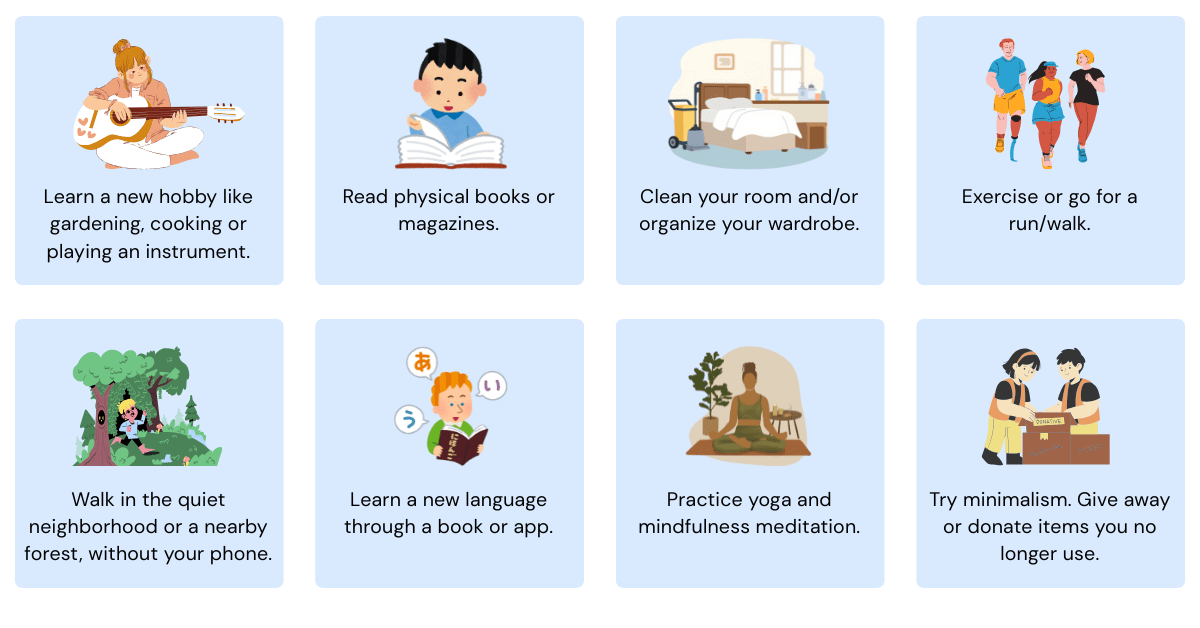
When you shift your focus to real experiences, your need for constant digital stimulation fades naturally.
Over time, your brain starts associating peace, focus, and satisfaction with real-life moments, not glowing screens.
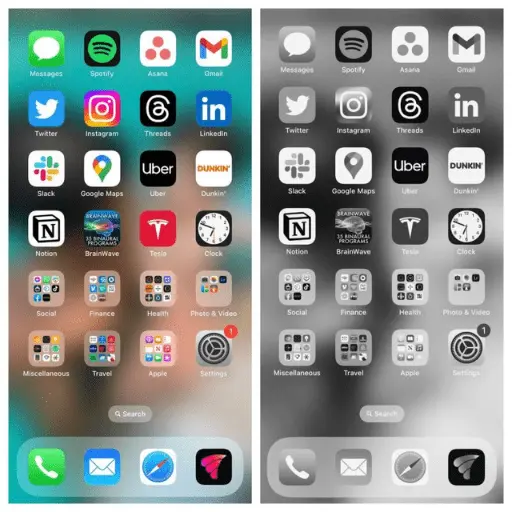
Bonus: Switch to Grayscale Mode
Colorful apps are designed to keep you engaged. Turning your phone to black and white removes that visual stimulation and makes scrolling much less interesting. You’ll be surprised how fast it reduces mindless usage.
Additional Tips for Overcoming Digital Dependence
- Keep your phone away while working or sleeping.
- Use “Do Not Disturb” mode during focus hours.
- Charge your phone outside the bedroom.
- Practice mindful usage: ask yourself “Why am I picking this up?” before unlocking.
- Engage in offline hobbies: reading, journaling, or outdoor activities.
- Try a Digital Detox.
- Use Minimalist Launchers or Focus Apps.
- Utilize “Digital Wellbeing” feature if you’re using an Android phone.
Takeaways
Phone addiction may feel hard to break, but it’s entirely possible with consistent effort. The key is to retrain your brain, by removing triggers, reducing dopamine-driven behavior, and reconnecting with the real world.
