

What is a Panic Attack?
A panic attack is a sudden burst of strong fear and discomfort that triggers strong physical and emotional reactions. It is the body’s natural flight-or-fight system getting activated without any real threat.
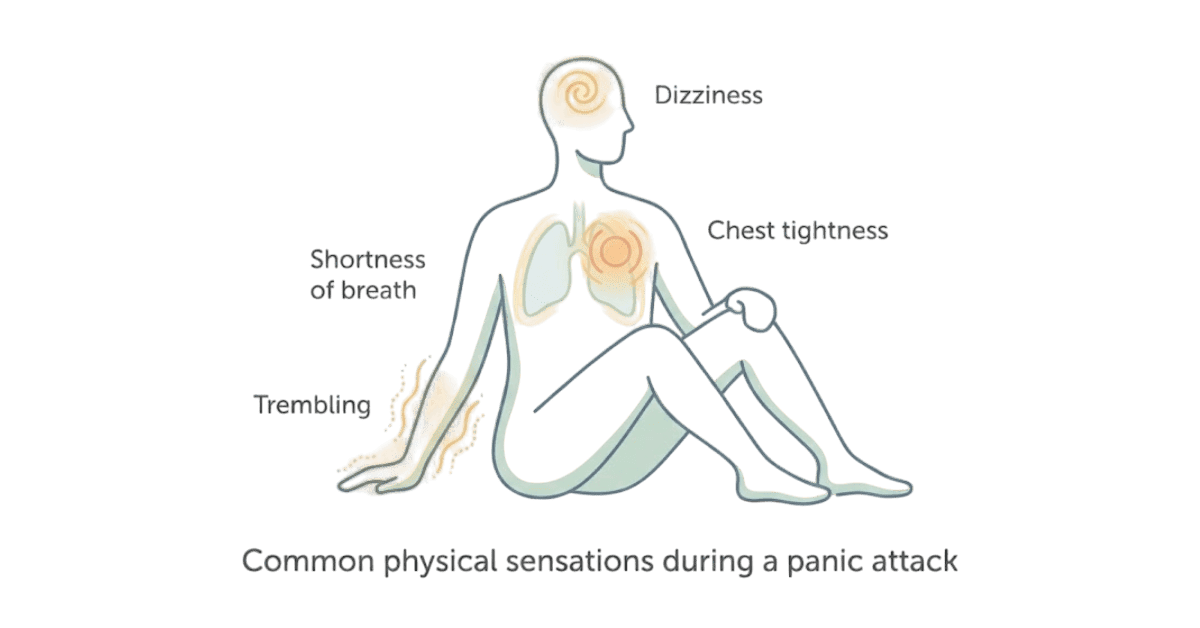
During a panic attack, a person suffers extreme symptoms like:
- Shortness of breath
- Dizziness
- Trembling
- Chest Pain
You will feel an overwhelming feeling of losing control, a fear of having a heart attack and even dying.
Understanding Panic Attack: History
The experience of panic attacks is deeply rooted in the ancient survival mechanisms of the human body — specifically, the fight-or-flight response. This response evolved millions of years ago as a critical system to protect early humans from immediate dangers like predators, natural disasters, or hostile encounters.
The Origins of Fight-or-Flight
When faced with a threat, the brain’s amygdala signals the release of adrenaline and other stress hormones. These chemical messengers prepare the body to either fight the danger or flee from it. This leads to physical changes such as a faster heartbeat, increased breathing rate, dilated pupils, and heightened alertness. These changes were vital for survival in prehistoric times, enabling swift reactions to life-threatening situations.
From Survival Mechanism to Modern-Day Panic
In today’s world, the threats we face are rarely immediate physical dangers. Yet, the ancient fight-or-flight system remains active in our bodies, sometimes misfiring in response to non-life-threatening stressors like work pressure, social anxiety, or unresolved trauma.
When this system activates intensely without real danger, it can trigger a panic attack — a sudden flood of fear and physical symptoms identical to what early humans felt during actual threats. The brain essentially mistakes a harmless situation for a life-threatening one.
Why Does This Happen?
Modern life includes many psychological and emotional stressors that can confuse the brain’s alarm system. Past traumatic experiences, genetic predispositions, chronic stress, or anxiety disorders can make the fight-or-flight response more sensitive or easily triggered, leading to panic attacks.
How to stop a Panic Attack?
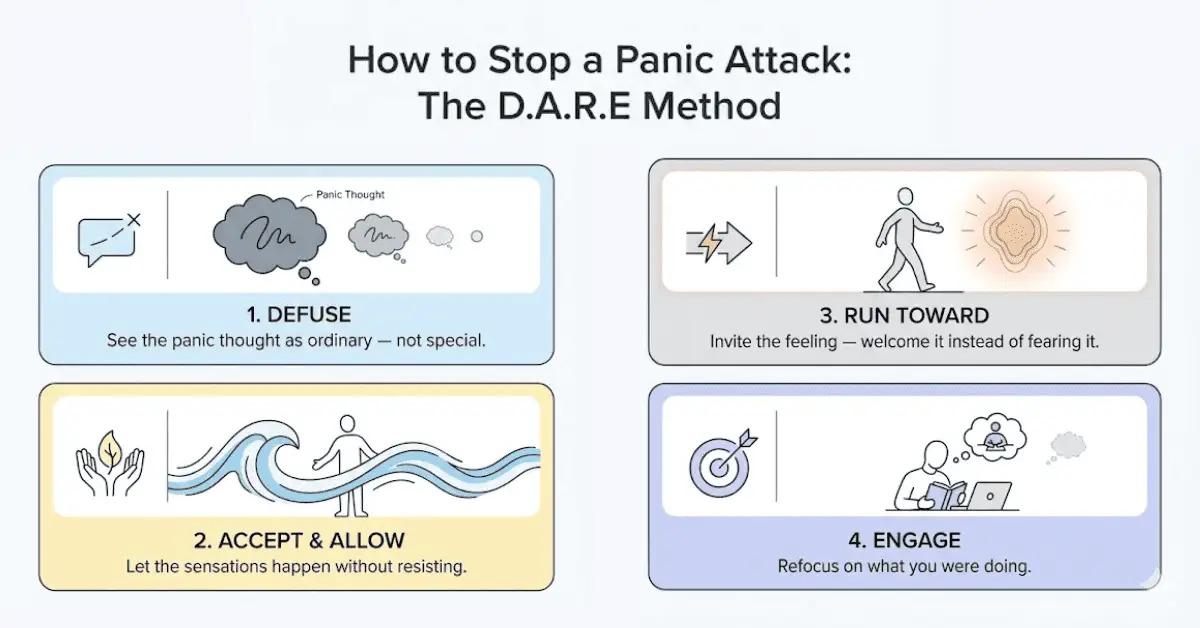
There are multiple ways to help manage panic attacks immediately, but the D.A.R.E response by Barry Joe McDonagh worked best for me. Honestly, it was never about “avoiding” panic attacks for me, I wanted to make sure they don’t happen too often.
You cannot completely eliminate panic attacks because they’re deeply connected to your overall mental health, but this is the most effective way to reduce frequency and suppress the symptoms.
Here is how this works in 4 steps:
- Defuse: As soon as you have a panic attack, you don’t consider it something special. You view it as normal as a regular thought. The less attention you give it, the less power it has over you.
Accept and Allow: Next you let go of the struggle to make the anxious feelings disappear. The more you force yourself to get rid of it, the more intense it will become. Instead, accept that this panic or thought is temporary and will not change you in any way.
“Accept” is the word used here. You need to acknowledge that you are having a panic attack, but don’t need to consider anything important to think about.
- Run Toward: After accepting that panic attack is nothing special, you need to crave it. Reframe this panic or anxiety as exciting energy. You want it in you. Instead of fearing it, welcome it like you’ve been waiting for it. As soon as you do it, panic loses its power over your mind.
- Engage: Shift your focus back to what you were doing when panic struck. That’s it.
Remember: This method won’t stop a panic attack immediately. Instead, it requires consistent practice every time you experience one.
- In one week, you’ll likely notice the frequency of your panic attacks starting to decrease.
- After a month, you should experience significantly fewer attacks.
- In just three months, panic attacks will be rare and even if it occurs, your body will be more accustomed to it, so you’ll feel little to no discomfort.
Persistence is key.
Personal Guidance By My Therapist
During the first week of practicing this method, I struggled a lot. Then my therapist gave me a helpful perspective using a funny example from the classic cartoon Tom & Jerry — and it made everything click.
Here is how it goes.
Situation: I am sitting on my sofa, watching a movie. Someone rang the doorbell and when I opened the door, Tom jumped out to scare me! Imagine the words “Panic Attack” written on Tom’s forehead. I wasn’t expecting him, and he was really annoying. Tom just let himself in and sat right next to me on the sofa.
Handling
Defuse
I ignored Tom and went back to my seat on the sofa. I sat steady and relaxed without any fear or anxiety.
Accept & Allow
I didn’t try to force Tom out but instead sat beside him without focusing on him or talking to him. He kept annoying me, poking me, jumping at me and pinching me. I did not like the things he was doing, but I did not respond or push back those antics of his.
Run Towards
Then I did something that surprised Tom: I put my arm around Tom, pulled him closer and offered a cup of tea. Tom got annoyed, because his usual tricks to bother me weren’t working. I kept smiling at him, poking him playfully. He crossed his arms, frustrated that his plans failed. I was excited to play with him, but he was not.
Engage
Finally, I stopped doing everything and continued back with my work i.e., watching movies. Tom got bored and left.
This was not a mere story, but an act I had to execute in my mind every time a panic attack came. I had to imagine Tom being the “Panic Attack.”
Causes of a Panic Attack
Reasons of panic attacks is not completely known but research suggests a few factors that may play a role:
- Chronic stress
- Overthinking
- Physical health issues
- Genetics
- Substance use
- Trauma and Past Experiences
Usually panic attacks come only when your subconscious mind detects threats, but if you have certain mental health issues, it may come suddenly at any time.
Takeaways
Panic attacks feel intense, sudden, and overwhelming, but they are not dangerous — they are simply the body’s fight-or-flight response activating unnecessarily. The symptoms such as chest pressure, trembling, dizziness, and shortness of breath may feel scary, yet the body remains safe.
The D.A.R.E method is one of the most effective ways to weaken panic attacks because it teaches you to accept the sensations instead of fighting them. The more you resist a panic attack, the stronger it becomes; the more you accept it, the quicker it fades. Over time, with consistent practice, panic attacks reduce significantly. They are often triggered by chronic stress, overthinking, trauma, genetics, or lifestyle habits, which cause the brain to misinterpret normal sensations as threats.
If you want to get rid of panic attacks entirely, you’ll need to focus on your overall mental health.
Learn about Mental HealthFAQs about Panic Attacks
They can happen anytime: during stress, relaxation, or even sleep. Often they come suddenly without warning.
No, they feel intense but aren’t physically harmful. They are temporary and pass on their own.
It feels like sudden fear with symptoms like a fast heartbeat, breathlessness, shaking, or chest tightness. Many mistake it for a heart attack.
Panic attacks are sudden and very physical; anxiety attacks build slowly from stress. Panic peaks quickly, anxiety feels more ongoing.
Racing heart, sweating, trembling, short breath, dizziness, chest pressure, and fear of losing control. Symptoms peak fast but fade.
No, they cannot kill you. The fear is strong, but the body remains safe.
Stress, overthinking, caffeine, trauma reminders, substance use, or no clear reason at all. The brain misfires a “false alarm.”
Usually 5–20 minutes. They peak quickly and then fade.
You can reduce it with slow breathing and grounding. It may not stop instantly but becomes easier to manage.
Go if it’s your first time or you’re unsure. Otherwise, most attacks don’t need medical care.
Yes, they can occur at night and wake you suddenly. They feel similar to daytime attacks. If you suffer from sleep apnea, they may feel more intense.
Yes, definitely. Exercise, sleep, less caffeine, and relaxation help a lot. Small habits calm the nervous system.
Not always. Therapy and lifestyle changes work for many people, while medication helps severe cases.
