

Do you often wake up tired, even after a full night’s sleep, and wonder, ‘Why do I feel tired all the time?‘?
You’re not alone. Over the last two-three decades, more and more people have started to feel exhausted without doing much work.
This exhaustion isn’t due to laziness, but something far deeper in your mind.
It’s the draining of your mental energy.
The Difference Between Physical and Mental Fatigue
Exhaustion or fatigue can happen due to multiple reasons:



Physical fatigue basically happens when you work so hard that you lose the majority of your stamina and endurance. It happens due to physical work that uses your body and muscles. It recovers easily through rest, sleep and nutrition.
Mental fatigue is a state of ‘feeling tired‘ after a prolonged use of your cognitive functions i.e., using your mind to perform too many tasks. When you reach a mental fatigue state, you lose your ability to focus and make rational decisions. If you find yourself feeling tired all the time, it is due to mental fatigue or mental overload.
But why do I feel tired all the time?
Our body recharges through rest, but our mind doesn’t just need rest; it needs mental peace to recharge. This mental peace is usually acquired during sleep or when your mind is kept empty by some means, like mindfulness.
If our sleep is not good and we don’t empty our mind occasionally, the mind never gets real rest. It keeps on working 24/7 and gets drained, leading to feeling tired all the time.
Symptoms of Mental Exhaustion
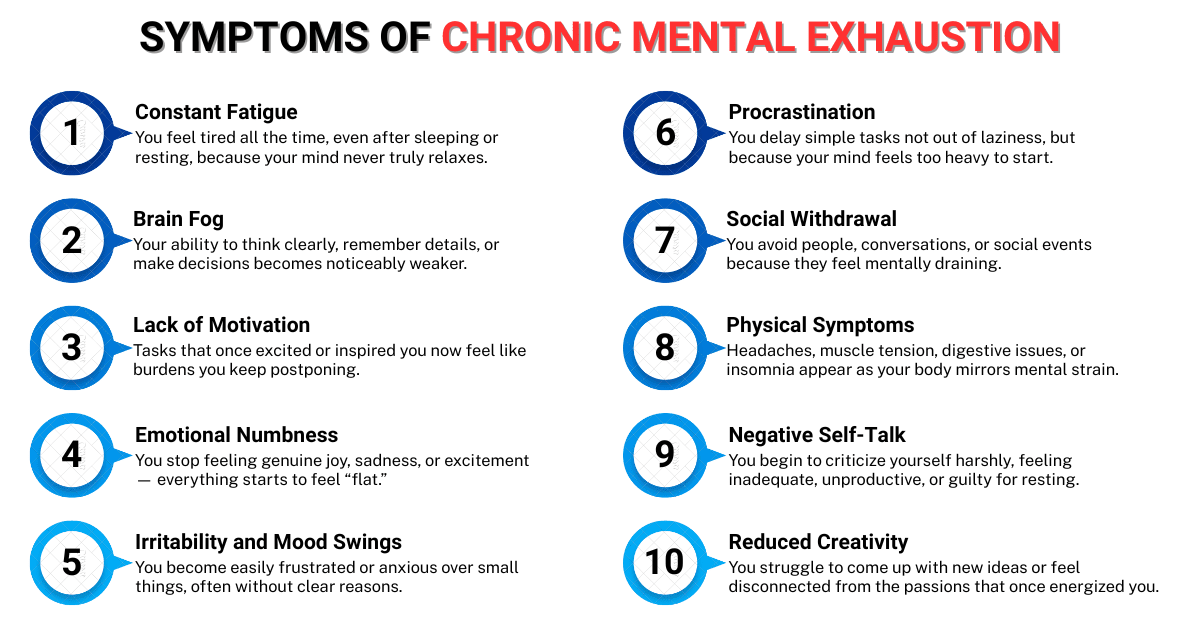
These are the common symptoms and signs that show you’re suffering from mental exhaustion:
- Procrastinating more than usual
- Isolating from friends and family
- Losing interest in hobbies or passions that you once loved
- Feeling guilty for not being “productive enough”
- Difficulty thinking clearly or remembering things (brain fog)
- Easily distracted or zoning out during tasks (lower attention span)
- Feeling emotionally numb, detached, or “blank”
- Frequent feelings of hopelessness or helplessness
- Persistent tiredness even after rest
- Weakened immunity (falling sick more often, especially digestive issues)
- Low motivation
Disadvantages of Mental Exhaustion
If you feel mentally exhausted after a long day of cognitive work, like under pressure in the office or becoming too emotionally involved in any event, it’s common to feel drained. There is nothing wrong with it.
But if you suffer from chronic mental exhaustion, even on the days you haven’t done much cognitive work, that’s the time to start taking things seriously.
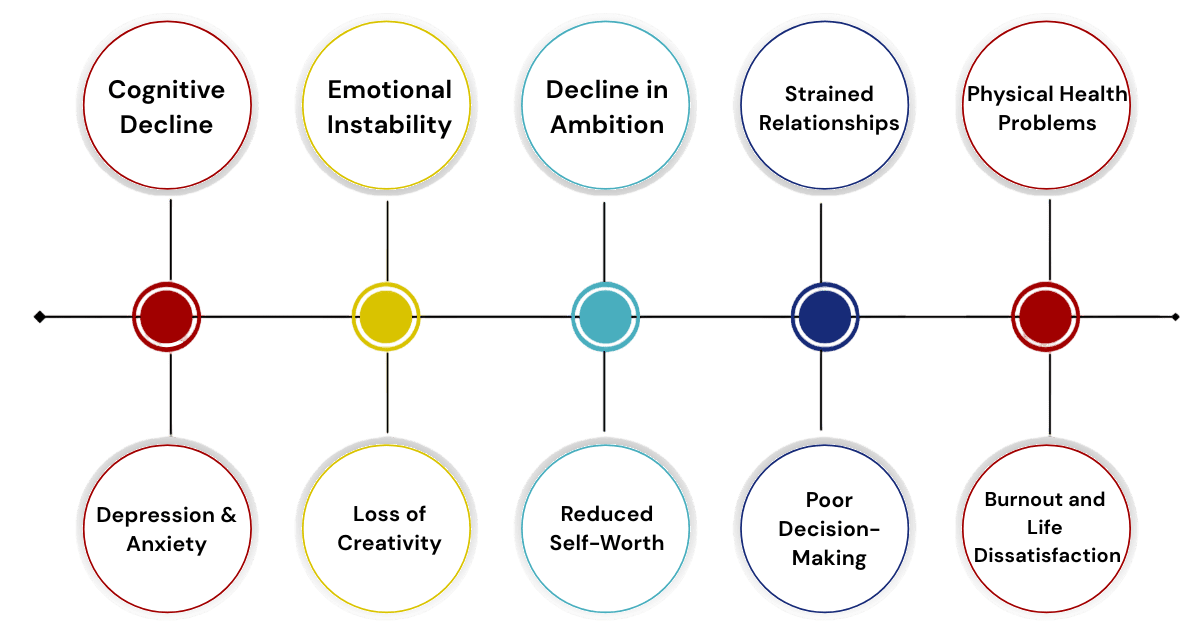
Here are some common problems chronic mental exhaustion leads to:
You start forgetting things more often. Staying focused becomes harder, and even simple decisions feel heavier than they should. The mental clarity you once had begins to blur.
You become irritable, anxious, or emotionally sensitive without any strong reason which leads to anxiety, mild depression, or emotional instability.
Goals that once excited you now feel like a burden. You keep telling yourself you’ll “start tomorrow,” but that tomorrow never comes. This leads you to hate yourself and doubt your own value.
When your energy runs low, you withdraw. Conversations feel draining, empathy feels harder, and you start building quiet walls, not because you want to keep everyone away, but to protect yourself. Gradually this leads to loneliness.
Chronic stress elevates cortisol, leading to fatigue, hormonal imbalance, sleep issues and other health related problems especially digestive issues.
Things you once loved now feel dull. Your procrastination increases not because you’re lazy, but because everything around you feels heavier than they should. That spark which once ignited your passion for things, is no longer there.
Constant exhaustion can trick you into believing you’re lazy or incapable, affecting your self-respect, self-esteem and confidence levels. To cope, you reach out to the dopamine hits: caffeine, junk food, alcohol, cigarettes, etc for quick relief, but it never happens.
Due to constant mental overloading, everything around you feels dull, you start to question your own life. Everything around you becomes meaningless. You start feeling hopeless. You don’t remember when was the last time you smiled genuinely.
These things don’t happen because we wanted them to happen. They happened due to chronic mental exhaustion; the feeling of being tired all the time.
Gradually, your subconscious mind will start learning to live with them and it will make you feel that these harms are all “part of who you are”. This is the survival instinct of your subconscious and if you start living with them as your mind wants, you’ll suffer the pain of regret for the rest of your life.
How to stop feeling tired all the time
You wake up after a full night’s sleep but still feel exhausted before the day even begins. Your morning coffee doesn’t help much. The weekend passes, but you’re still drained.
So, you wonder — why do I feel tired all the time, and how do I stop it?
Thankfully, we’re not born with this feeling. We build it. And whatever we can build, we can also destroy. Here are the 5 most powerful ways you can stop yourself from chronic mental tiredness:
1. Mental Detox
The first thing that you need to do is to be aware of everything that you do. Don’t let your subconscious do things automatically (except a few things). Be aware of every action, thought, and feeling that you’re having.
- Clear your mind at least once every day for 5-15 minutes. Sit in silence and try to not think about anything. Look into mindfulness meditation to know how.
- Thought Journaling: You may think this is stupid, but writing your thoughts, ideas, feelings, etc in a journal helps build self-awareness and reduce overthinking thoughts.
- Reduce Doomscrolling: Doomscrolling is an act of moving from content to content automatically without thinking like reels, shorts, Reddit, etc. It is one of the most harmful ways to destroy your mind and precious time.
- Avoid Taking Unnecessary Mental Load: Say ‘no’ to things that literally provide no value to you or anyone else. Avoid arguments, gossip, news and negative people as much as you can.
2. Routines & Habits
Your life is made up of the average things you do, think, feel, say and listen to every day. What you do today acts as a base for what you will be tomorrow.
The best preparation for tomorrow is doing your best today.H. Jackson Brown Jr.
- Set up a daily morning and evening routine: Fixed wake-up and sleep time, making your bed immediately, drinking water, light stretching, reading, journaling, etc. Start with very small tasks; tasks that won’t take more than a few minutes. This helps your mind build momentum for what’s to come. As you keep doing them, you can add more tasks or increase the difficulty level.
- Avoid multitasking at all costs: It may sound good to multitask. It feels like we’re doing more in less time, but the truth is, you’re harming your focus and concentration skilsl. Your brain isn’t built to handle multiple tasks that require attention at the same time; it just switches rapidly between them, which drains your mental energy faster. Don’t eat meals while watching TV, don’t listen to music while working out, don’t check your phone while talking to someone, etc. These may look harmless, but their damage to your brain is too much to ignore.
- Reduce stimulants as much as you can: Caffeine, alcohol, and cigarettes can provide temporary relief, but in the long-term they are harming your physical as well as mental health. You’re more likely to suffer from anxiety and depression if you take advantage of such stimulants for temporary relief.
3. Sleep
Do not ignore this valuable asset. Sleep is not optional. It is by far the best treatment for any type of mental health issue, including the constant tiredness you’re feeling all the time.
Your mind needs rest. During sleep, your subconscious mind processes all the information you have acquired throughout the day. Your sleep quantity and quality determine if your mind will have enough time to process everything.
If your sleep quality is bad or you don’t sleep enough, your mind is not able to process everything throughout the night. When you wake up, you start feeling tired already because your mind is still processing yesterday.
- Set up a fixed time for sleep.
- Stop using smartphones, computers and TV at least one hour before going to bed. The less information your mind has to process during the night, the better quality sleep you’ll have.
- Keep your room dark, quiet and cool. A warm room creates difficulty in falling asleep.
- Try to keep your mind empty while lying in bed. Use sleep music like theta waves or nature sounds to keep your focus so you don’t overthink.
4. Physical Health
You cannot improve your mental health if your physical health is not well. When your mind has enough nutrition, oxygen and blood flow, it works optimally. In such an optimal condition, the chances of mental health deterioration like mind exhaustion are extremely less.
Even if something happens, your mind is able to bounce back quickly because it is under good working conditions. However, if your mind is not getting good nutrition or enough blood flow, it is not able to work as well as it should.
This gives rise to various elements of mental health damages like overthinking, procrastination, lack of discipline, perfectionism, anxiety, emotional imbalance, etc. It not only affects your mental health, but also starts further damaging your physical health due to a weakened immune system.
You don’t have to join a gym or drink protein shakes, just the basics will do miracles:
- Walk for 15–30 minutes every day, preferably in sunlight.
- Stretch every 60–90 minutes if you sit a lot.
- Avoid food like caffeine, sugar, chips, soft drinks and smoking. If you cannot stop them, at least reduce their consumption.
- Stay hydrated. Drink at least 3 liters of water every day.
- Spend time in sunlight.
5. Manage Boundaries
You define your own value. You will be respected by others just like you respect yourself. You will be defined by others exactly as you define yourself. You are made by your own beliefs, feelings and thoughts about yourself.
If you are not valued and respected by your friends, family and peers, that means you don’t value and respect your own self.
Setting a boundary is the first key, otherwise people will just keep using you for their own benefit. They will remember and call you only when you’re needed; other times it will be like you don’t exist.
You’ve felt that, haven’t you?
Your boundaries tell others that you’re not “free”; you have a life of your own and you have your own likes and dislikes.
- Notice who and what drains or energizes you. Once you realize that, stop doing those things and hanging around with those people who drain you.
- Don’t try to fix everyone’s problems at the cost of your own mental peace.
- Learn to end conversations that provide no value to you.
- Stop saying ‘yes’ to those things that you don’t want to do.
- Learn to say ‘No’ without justifying yourself. You don’t owe anyone a reason to refuse something. If you have to, keep it minimal; don’t divulge too much information. Let them realize that there are things in your life that they don’t need to know.
- Stop being “available” every time.
- Learn to stop feeling guilty for things that you do to protect your mental and emotional self, including saying ‘No’.
The Path to Mental Energization
It’s easy to think that feeling tired all the time is just how life is now; that adulthood means stress, fatigue, and caffeine. But that’s not true.
The real problem isn’t your body, it’s your mind running on autopilot.
When you start being aware of your thoughts, habits, and emotional patterns, you’ll notice that most of your tiredness doesn’t come from doing too much. It comes from doing the wrong things too often; things that drain your energy without giving anything back.
You don’t have to change everything overnight. Small improvements, done daily, rebuild your inner power faster than you can imagine.
When your mind is calm, your body follows. When your body feels healthy, your mind gets clearer. And when both align, life starts to feel lighter again.
Takeaways
You weren’t born to live tired. You just learned to live that way.
Every day, your actions, routines, and boundaries either drain your energy or restore it. The difference between a drained person and an energized one isn’t luck; it’s awareness.
So, be aware of what you allow into your mind. Be aware of who you give your energy to. And be aware that your energy is the most valuable currency you’ll ever own.
When your mind rests, your life begins to move again, with purpose, clarity, and strength.
If this post resonated with you, take a few minutes today to do one small thing from this list, even if it’s just sitting silently for 10 minutes or saying “no” once.
Subscribe